
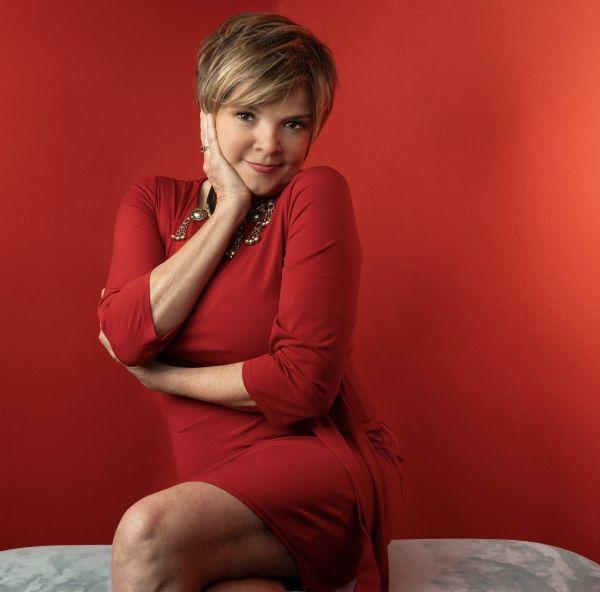
Vocalist and pianist Karrin Allyson talks with Blaise Lantana about her concert at the Musical Instrument Museum, her 2024 album "A Kiss For Brazil," and how she incorporates different genres of music into her performance. To learn more about Karrin Allyson's recordings and concert calendar, visit karrin.com
Transcript/Text Alternative
Interview Transcript: Karrin Allyson on KJZZ
[00:00 - 01:21] [Music: Ethereal, gentle Brazilian jazz featuring soft acoustic guitar and airy vocals, slow tempo. Song Title: "Double Rainbow"]
Listen, the rain is falling on the roses
The fragrance stretch across the garden
Like the scent of some forgotten melody
This melody belongs to you, belongs to me
Belongs to no one
See the way the crimson petals scatter when the wind blows
Old secret silence suddenly only your heart knows
See how a robin's there among the branches
And hopping through the misty raindrops
She comes to tell us it is spring
Look at the double rainbow
Look at the double rainbow
Blaise Lantana: That is vocalist Karrin Allyson doing "Double Rainbow" from her album Imagina, and this was one of Karrin's most loved albums of all time. Every time I would see her play, the audience would be like, "Oh, do some Brazilian music!" And so she decided to make another album—of course, she did Paris Trio—but here we have a new album that she put out in 2024. It's called A Kiss for Brazil, and Karrin Allyson is here with me in the studio because she has a concert coming up at the MIM, the Musical Instrument Museum, and that will be Friday night, May the 1st. Show starts at 7:30. You can check our website at jazzphx.org, find out how to get tickets and all that information to come and hear Karrin Allyson. Welcome to KJZZ, Karrin.
Karrin Allyson: Thank you very much, Blaise. Always a pleasure to be with you.
Blaise: Oh, thank you. We really—I remember I've seen you up at the MIM before and it's just delightful. It feels like we're in your living room. It's such a nice, intimate show.
Karrin: That's a really great way to put it because I want it to feel, you know, intimate. Yes.
Blaise: So how did you get—now, you're from the Midwest originally, Nebraska, lived in Kansas City and moved around a bit—but how did you connect with Brazilian music? It seems a long way from Kansas City.
Karrin: Right. Um, well, the world is getting smaller and smaller all the time. I've been in New York City for over 25 years now, but you're right, before that Kansas City. And that's actually where I discovered Brazilian music through some wonderful players that I was working with and listening to. And I just—I got the bug very badly. And now Brazilian music is such a part of the jazz canon, you know, thanks to composers like especially Jobim, but many, many others that, you know, you almost can't get away with not doing it. I love the grooves, I love the language, I love the messages can be very deep, they can be very just breezy, I guess, you know. But I like where it puts us when we perform it and when the audience is into it and it just—it kind of takes you somewhere.
Blaise: Kind of can take you to Brazil, I guess. Well, let's listen to Karrin Allyson, and she has Vitor Gonçalves—is he going to be with you on this tour or not? Who's with you? Who's playing piano for you on this at the MIM?
Karrin: Not on this one. I have a wonderful pianist, Miro Sprague, and I will also be playing, so we share the keyboard duties, which is always a lot of fun.
Blaise: Well, let's listen now to Karrin Allyson's latest release, A Kiss for Brazil, and this is "Wave" on Jazz PHX.
[04:47 - 06:17] [Music: Sophisticated, mid-tempo Bossa Nova with rhythmic vocal scatted intro, suave piano, and steady percussion. Song Title: "Wave"]
So close your eyes
For what a lovely way to be
Aware of things your heart alone was meant to see
The phenomenal loneliness goes
Whenever two can dream a dream together
You can't deny
Don't try to fight the rising sea
Don't fight the moon, stars above
And don't fight me
The thought of all the loneliness goes...
Blaise: That is Karrin Allyson doing "Wave," that’s from her album A Kiss for Brazil on Jazz PHX. Karrin Allyson is here with me in the studio. She is going to be performing Friday, May the 1st at the MIM, the Musical Instrument Museum. The show starts at 7:30. You can get tickets through our website, find out about how to do that at jazzphx.org. And we're talking just a little bit about that Brazilian flavor and, you know, one of the things I love about Brazilian music is that it's not a lot of shouting. I like that. I mean, I love the blues too, of course, that has an energy, but Brazilian music has an energy without—I don't know, how would you explain that? What is it?
Karrin: I know what you mean. It's kind of a quiet, more intense thing. But of course, it depends on the performer, too, because, you know, somebody like Elis Regina, she went another direction, you know, and was more—I kind of think of her as the Billie Holiday of Brazil somehow. But she was—she also could really, you know, support a big, big sound with her approach. Um, on this particular CD I invited Rosa Passos and she sings two songs with us, one of the greatest singers. And the drummer you're hearing, which is so important too, is Rafael Barata, who's also from Brazil, and I actually met him in Brazil when I was playing there years ago, and we remained in touch and eventually he moved to the States and now we're working together. And he'll be with us at MIM as a matter of fact.
Blaise: Now, do you think that a Brazilian drummer has a different vibe for this music? Do you think they come in with a little added attraction?
Karrin: Oh, yes. I mean, it's just like, if I may say, in American jazz, you know, Americans coming to play jazz standards, you know. It's in your blood, you know, and not to say you can't play other styles well—I mean, certainly I'm, I hope I'm a testament to that—but, you know, it really if it's in your blood, it's in your blood.
Blaise: Yeah. Now, when you started getting interested in this music, did—is that when you started studying Portuguese or did you study that in school before that?
Karrin: No, I did not study Portuguese. I studied French, and um, so I incorporated some French music into my repertoire for years and still do, as a matter of fact. But the Brazilian Portuguese happened through the music, and I have a tutor, she helps me out with pronunciation and eu não falo português muito bem, which means I don't speak it very well, but I do sing it and, you know, I can order a caipirinha and, you know, vinho tinto. So, to that—is to say I feel like, you know, the soul of it is within me and I've had a lot of good support through musicians I work with and my tutor.
Blaise: Well, you sound wonderful when you sing in Portuguese and I just wondered if it was challenging to memorize the tune in Portuguese after learning all the pronunciation, you know.
Karrin: Yeah, that is true. Um, it is challenging. And sometimes I use lyric sheets. I try not to, and I don't for probably 99% of what I do, but um, Brazilian music is just a part of what we do. I feel like I have so many hats I wear musically, so I have to sort of just keep track of all of it, really.
Blaise: Now, when you do—you have a few things, I really like you do some blues, you do some bebop. How do you make those transitions when you're in a—doing a show? Or do you specifically say, "Okay, this show's going to be mostly blues," but I mean, making a transition from say, a Brazilian tune to a punchy blues tune or cooking bebop tune? It's very—can be jarring. How do you make those transitions?
Karrin: Well, I don't know. It's a pretty mysterious process. And, you know, it's kind of like walking a tightrope sometimes. It really matters the players you have, too, that they can be very, you know, have a variety of styles within their own approach as well. And that's very important for me. I can't just play with a bebop drummer or, you know—and so I really appreciate the players I work with to have it really a variety of styles under their belt as well.
Blaise: Right. That dimension with the team, the whole team on board with it. But do you—when you do the show, do you ever emphasize a certain style you're going to do for the show, for the tour? Like you're on tour now, do you have like—?
Karrin: Yeah, yeah, right now it's not—this is, you know, this is more of like a three-show run thing, I wouldn't call it necessarily a tour. But um, sometimes I do. This one is what we're calling "Kaleidoscope," which is just that. It's a bit of this, it's a bit of that. I have original songs, I have some French material, I have some Brazilian tunes as you've mentioned. Um, and you know, I do try to not make it feel like we're just jumping all over the place even though we kind of are, I guess. But um, you know, that's what is actually kind of fun about it, too.
Blaise: Right. Well, let's listen—this is Karrin Allyson doing "So Many Stars," this is from her album A Kiss for Brazil, and she is going to be performing at the MIM, the Musical Instrument Museum. That show is Friday, May the 1st, and it starts at 7:30. Find out if you can still get tickets, check our website jazzphx.org. Here's vocalist Karrin Allyson.
[11:51 - 13:14] [Music: Melancholy, slow-tempo ballad with a subtle Bossa Nova pulse, lush acoustic guitar and emotive, smooth vocals. Song Title: "So Many Stars"]
The dawn is filled with dreams
So many dreams, which one is mine?
One must be right for me
Which dream of all the dreams
When there's a dream for every star
And there are oh, so many stars
So many stars
The wind is filled with songs
So many songs...
Blaise: Karrin Allyson doing "So Many Stars," and Karrin Allyson is performing at the MIM on Friday night, May the 1st. The show starts at 7:30 and she's doing a "Kaleidoscope" of music, a variety of music for this show at the MIM on Friday night. Check our website and find out more about the show, how to get tickets, all that information is at jazzphx.org. But the other thing people may not know about you is that you're actually as much a pianist as a singer, although you have become more, you know, front—as a front person, more of a singer.
Karrin: Yeah.
Blaise: Which did you start with and how did you get started playing music?
Karrin: Um, my mom was my first piano teacher and I was a classical piano major in college and a French minor. So I was very much involved in classical music. And my partner Bill McGlaughlin also is a beautiful classical musician and he has a radio show called Exploring Music with Bill McGlaughlin—a small plug there. And um, so I'm still involved in classical music in a way just by listening to it and loving it. And I think that the work ethic in my, you know, Bachelors in Music Performance really helped with what I do now and continue to do now. Um, when I teach, you know, I stress—because a teacher of mine did this—that we are musicians who sing, you know. If it's a drummer, that's a musician who plays drums. If it's a saxophone player, you're a musician who plays saxophone. But we're all musicians and we need to take responsibility for the music. Um, I feel like I'm very much a part of the band. I am the bandleader. I don't have an MD; I am the MD, which is a music director. And as I said, I really lean on my players a lot and count on them to go with me. And that's big.
Blaise: Do you write charts out for them too? Do you—are you the one writing out the charts or you have the idea for the charts?
Karrin: I do both. I either get help writing the charts or I actually write the charts out, yeah.
Blaise: And so if people—if I don't know if they know—not everybody knows what a chart is, but that's like a little map of where the song is going and it kind of tells the drummer what to do and the sax player what to do and each instrument what to do, and it's really a lot to build—has a lot to do with how the song is built, and it takes a lot to write those out and, yeah.
Karrin: Couldn't have said that better myself. Beautiful.
Blaise: Well, it's just funny when I see especially singers who get up and sing and write out all these charts and leading the band. It's a lot more than people understand or know about. But do you get to play classical music anymore? Do you ever play it?
Karrin: For myself sometimes, yes. Um, you know, I have ideas about—well, actually, very first CD I put out, I played a Chopin Prelude up front in front of "How Insensitive," which is a Jobim song, and he based "How Insensitive" off of that Prelude. So I played that. Um, and I told you my mother was a beautiful classical pianist and so—
Blaise: Did anybody else in the house play? Did brothers, sisters—do you have anybody?
Karrin: My sisters are musical, but they never really—they never went there. And my dad was a—was a thespian, really. He was a pastor, and um, he was very—he could sing, but terrible pitch. Sorry, Dad! But he actually liked country music a lot. And I, you know, I appreciate anything that's good. So I love a lot of classic country too, and um, you know, he always thought that that tells a story, and it's true, but so does jazz, you know. So it's just a different, you know—
Blaise: You probably had to convince him about that one, though.
Karrin: Oh, yeah. I did. And eventually I did.
Blaise: Well, of course. Well, let's listen now to Karrin Allyson doing "Nobody Said Love Was Easy," and then we're going to hear "Antígua" from her album A Kiss for Brazil. Karrin Allyson is playing Friday night, May the 1st. This week, that's at 7:30 in the evening, it's at the MIM, the Musical Instrument Museum. Check our website to get tickets, find out how to get tickets and the location of the event, all that at jazzphx.org. Well, here's singer and bandleader, pianist Karrin Allyson on Jazz PHX.
[18:35 - 19:53] [Music: Sassy, mid-tempo jazz-blues with a walking bassline, punchy piano chords, and a soulful, slightly raspy vocal delivery. Song Title: "Nobody Said Love Was Easy"]
Nobody said love was easy
And if they did it's a lie
A promise made in the moment can end in goodbye
Two lovers kiss in the moonlight
They toss their fate to the tide
Their only thought was to hang on and go for the ride
Time has a way of changing
The way that we feel...
[19:53 - 21:03] [Music: High-energy, fast-tempo Brazilian bebop featuring rapid-fire wordless "vocalese" singing, intricate piano melodies, and driving percussion. Song Title: "Antígua"]
Pa-du-pa-pa-da-way-pa-bu-pa-pa-ba-da-pa
Ba-du-pa-pa-da-way-pa-bi-pa-ba-pa-ba-da
Pa-du-pa-pa-da-way-pa-bi-pa-ba-ba-pa-ba-da-pa
Pe-de-ya-pa-ba-da-pa-ba-ga-ya-pa-be-ba-pa-bi-ba-pa-ba-ba-da-ba
Ba-bu-pa-ba-da-way-pa-bu-pa-ba-da-ya
Ba-way-da-da-da
Bi-da-da-da-da-da-da-da-da-way-ya-ba-da-da
Bi-da-da-da-da-da-da-way-ya...
Blaise: Karrin Allyson doing "Antígua" on KJZZ 91.5 HD2 Phoenix. And before that, you said that tune, "Nobody Said Love Was Easy," you wrote that.
Karrin: Yes, I did. My—my co-writer Chris Caswell and I wrote that tune. And that's on a CD of ours called Some of That Sunshine, which is all original stuff, which I'm starting to do a lot more. I have several newer ones on—out on Spotify, which I'll probably do at least one of those at the concert at MIM. And yes, "Antígua" is from the Brazilian CD, the latest Brazilian CD, and that's a mouthful. It's, you know, it's what we call "vocalese" in jazz. There's no lyric. And it's challenging to do that kind of thing. It's kind of like singing a bebop line, only it's a Brazilian bebop line kind of.
Blaise: Right. So do you—how do you find Brazilian harmony different from bebop harmony? How—how do you think of it differently? Or do you see it as different? Hear it as different? No, not really?
Karrin: I—well, I do, but I don't know how to describe how I feel about that. Um, I'm not, you know, a jazz theoretician. Um, I know about harmony, of course, but—you're right, there's something different, at least I think that's what you're alluding to.
Blaise: Yeah. And also this was, you know, you're kind of doing bebop lines on this "Antígua" tune, you know, you're doing—not lyric, but your own concept of what goes over the melody, and it's different. It's something unique. And so I just wondered if it kind of ties into your attitude about bebop or is it like—there's a separation there, I think. Very slight separation when you get into any kind of Latin music. There's just a difference.
Karrin: Yeah, you know, I don't have—to be honest, don't think about delineations in that way. Stylistically, when I'm singing, you know, I just try to be as authentic as I can. And that goes for any—any style I'm doing. Because again, I don't want it to feel like it's like we're jumping all over the place even though, as I said, we kind of are, but it's with an integrity, I believe, and for each of the styles.
Blaise: And you're telling us—and you're telling a story at whatever you're doing. Now, you started out in the Midwest. How did you get out of there? Was that college you got out?
Karrin: I dug out. Um, actually, I really love the Midwest. I still feel like a prairie girl in a lot of ways. But um, I moved to New York, as I said, about 25—a little over 25 years ago with my partner Bill McGlaughlin. He was a conductor of the Kansas City Symphony at the time. And I was working all the time and doing recordings, and that's when my relationship with Concord Records started, actually, um, through another beautiful radio host, by the way, Stan Dunn, who was working for KJAZ out in San Francisco at the time. So, um, I have a long love affair with DJs like yourself because you're so—so supportive and, um, important to what we do and obviously for the listener. So I'm just going to put a plug in for the station because if you're not a member of this station, please consider it because we need your support—um, because we ain't getting it from other—other places these days. So anyway, um, so I appreciate what you have done, Blaise. So thanks.
Blaise: Thank you. Thank you. And you know, we are a 24-hour jazz station. We have jazz here day and night, night and day, but it is not on the FM. It is on the HD, which is something different, and this means that I go around and have technical discussions everywhere. I try to tell people where to find jazz on the radio. But some are finding it. I've gone out to cars and said, "See this little button here? This go to HD2 here." No lie. And they're so excited. "Oh my goodness, I can hear jazz all the time!" Yes, you can. But of course, you can also listen online at jazzphx.org. But so you—so you and your husband both left—or you both left for New York at the same time? But you both had big careers there in Kansas City. I mean, he's conducting the orchestra and you're playing and—
Karrin: Exactly, right. Yeah, and I was just starting mine, pretty much. Well, I was into it, but you know, and sometimes I think I'm kind of grateful that I didn't come here a little more green. Because this city can eat you alive. I mean, I love—I love New York. There's—there's a thing about living in New York that's hard to describe, um, just by saying you live in New York, it gives you like, credibility points. Yes, it does. It does. Because, you know, it take—it takes some fortitude. It takes fortitude anyway. And but, you know, it's—it's a beautiful city, um, and I love the diversity. Um, it's not for the faint of heart necessarily, you know, but I don't, you know, I travel quite a bit so I'm not here 24/7. So when I get to go on the road, I'm a little bit ready to do that. And then when I'm ready to come home, I'm like, "Yeah." I'm away from—you know, I haven't owned a car for 35 years or whatever it's been. Yeah. Um, and but when I get behind the wheel, you know, and I'm renting or something, oh, the freedom of that is cool, too. But um, there's just different thing, yeah. And I play, you know, all kinds of venues in New York City. Just played Dizzy's at Lincoln Center. Just played Birdland. The Birdland. Love to play—
Blaise: Now, what's interesting about those places is you're playing these big—they're big jazz names. If listeners don't know, these are big, big deal to play these clubs that Karrin is mentioning. You know, you don't just go there and say, "Oh, I want to play at Dizzy's," you know. I mean, it's a—it's a big deal to play there. But the audience, is the audience from New York City or is the audience like it is on Broadway from all over the country? Do you get a variety of audience coming into those places?
Karrin: Very much a variety. I mean, especially Birdland I would say, because it's in Times Square, and so it's very touristy, you know. But—and the Broadway, as you said, they—they schedule the sets so that folks after the Broadway shows can come. I mean, mostly.
Blaise: That's a good idea. No, it's a good idea to make that—
Karrin: Right, right. And so you walk from the Schubert Theatre over to Birdland in, you know, two seconds. So, um, that—yeah, and Dizzy's is—harder to describe, but yeah, I'd say it's pretty—cosmopolitan.
Blaise: That the people come from all over? Would you say?
Karrin: Oh, yeah.
Blaise: Because I think jazz musicians, now you're touring, it's true, touring makes a difference, but I have a personal vendetta against all of you guys living in New York City because I say, "You know, there's a lot to this nation. You are not taking it in and it is here and you are all clustered together in your little comfort zone there," and I just think I'd like to see more of you out here. You know, we had a few—we had Joey DeFrancesco here for a little while and there are so many different varieties of communities in this country. You know, like when you talk about the Midwest, talk about the Southwest. It's just—um, I want to find that coming together was Texas. Was the music in Texas kind of integrated, country, blues, jazz, like nowhere else I had seen and—but anyway, that's just my two cents about getting out.
Karrin: No, no, that's very interesting because I think you're right. There are very—you said it better than I could say it—there are different styles throughout this huge, beautiful country of ours and um, I feel lucky in that um, many areas kind of call me their home girl. So I really feel lucky about that. Even in L.A., you know, I've been playing there for years. Um, San Francisco, I went to school there for a year and I mean, that was high school so it had nothing to do with my jazz career, but um, but as far as having connections and, um, of course New York, of course Omaha, Kansas City, um, Seattle. I feel like—
Blaise: You have touched base in a lot of places.
Karrin: So many talented people all over the country, you know, and the audience, I'm including the audience in that too. Because I'm grateful for my audience because, you know, I've been in this business for a long time by now. And they've stuck with me and I've stuck with them and it's—I wouldn't say it's easy to get in the business, it's not, but it's—it's even more difficult to stay relevant in the business. So we are always as artists working to stay relevant within ourselves. And so we—we count on our audience members to a certain extent to—to support us in that endeavor, you know.
Blaise: Right. But you have such a unique sound. You have a very unique voice. No one can hear you and not know it's you. You know, there's a very distinctive quality to your voice. Did you always—did they always tell you that when you started, say, "Oh, this is unique, you're unique, you're going to do well," or "You're unique, can we change that?"
Karrin: Yeah, funny. When I was classical piano in college, don't know how much time we have here, but I was accompanying a—a vocal student in classical—a classical voice student. And the woman—and I was in a rock and roll band in the weekend, by the way, so I was always sounding a little hoarse. I've always had sort of a hoarse speaking voice and sometimes I guess still when I sing, too. Well, then I was really hoarse because I was blowing my chops on the weekend and staying out too late probably, but going to school. So she said, "Listen to Karrin, don't sound like she sounds."
Blaise: Now you're the one with the career. Right. So it does come around. Do you still play much piano?
Karrin: Oh, yeah.
Blaise: Yeah?
Karrin: Yeah. I'll be playing—I'm playing more piano than I—I mean, when I say more piano I'm not saying like I'm playing—please believe—I'm playing more often. Yeah.
Blaise: Because it's—it's different singing with an accompanist than being the accompanist when you're singing, and there's some freedom in being your own accompanist and there's some freedom in letting the guys who can play like crazy take the—take the piano chair.
Karrin: That's exactly right and I love both aspects of that.
Blaise: Yeah. And we're going to hear both of those when Karrin is here at the MIM music theater. She's performing Friday, May the 1st. Show's at 7:30 and she's going to bring her amazing band and they will be doing a kaleidoscope of music at the MIM, Friday, May the 1st. This is KJZZ 91.5 HD2 Phoenix and Karrin, thank you for coming by and talking with us today.
Karrin: It was a pleasure, truly. Thank you, Blaise.
Blaise: I look forward to hearing you on Friday. Well, let's listen to Karrin. Now, this is a fun tune, this is "Life is a Groove," and Karrin put the words to this, right? You wrote the lyrics? This is an instrumental tune called "Jordu" and she has her friend Nancy King on board.
Karrin: Right, the great Nancy King is singing with me. By the way, Duke Jordan, who wrote this tune, used to be married to Sheila Jordan. So he was her first husband. FYI. It's just kind of an interesting—but here's the lyrics I put to "Jordu" and Nancy—the great Nancy King is singing with me.
Blaise: All right. Let's listen to "Life is a Groove," or better known as "Jordu." Here's Karrin Allyson on Jazz PHX.
[31:26 - 32:51] [Music: High-energy, swing-tempo scat jazz with playful lyrical interplay, rhythmic piano, and a driving walking bassline. Song Title: "Life is a Groove" (Jordu)]
I told you once before my friend, Jordu
This is the kind of thing I love to do
So if you say you really want me to
I play for you
I used to dream of playing jazz all night
So if you ask me nice well I just might
Pick up my microphone and sing for you
Only for you
Jazz is a way to get lost in a place
And to work out your cares and woe
If you close your eyes you will soon realize
That life's lesson is to let go
And so my friend now you can plainly see
This is the kind of thing that is for me
As long as we can play in harmony
Life is a groove...
[00:00 - 01:21] [Music: Ethereal, gentle Brazilian jazz featuring soft acoustic guitar and airy vocals, slow tempo. Song Title: "Double Rainbow"]
Listen, the rain is falling on the roses
The fragrance stretch across the garden
Like the scent of some forgotten melody
This melody belongs to you, belongs to me
Belongs to no one
See the way the crimson petals scatter when the wind blows
Old secret silence suddenly only your heart knows
See how a robin's there among the branches
And hopping through the misty raindrops
She comes to tell us it is spring
Look at the double rainbow
Look at the double rainbow
Blaise Lantana: That is vocalist Karrin Allyson doing "Double Rainbow" from her album Imagina, and this was one of Karrin's most loved albums of all time. Every time I would see her play, the audience would be like, "Oh, do some Brazilian music!" And so she decided to make another album—of course, she did Paris Trio—but here we have a new album that she put out in 2024. It's called A Kiss for Brazil, and Karrin Allyson is here with me in the studio because she has a concert coming up at the MIM, the Musical Instrument Museum, and that will be Friday night, May the 1st. Show starts at 7:30. You can check our website at jazzphx.org, find out how to get tickets and all that information to come and hear Karrin Allyson. Welcome to KJZZ, Karrin.
Karrin Allyson: Thank you very much, Blaise. Always a pleasure to be with you.
Blaise: Oh, thank you. We really—I remember I've seen you up at the MIM before and it's just delightful. It feels like we're in your living room. It's such a nice, intimate show.
Karrin: That's a really great way to put it because I want it to feel, you know, intimate. Yes.
Blaise: So how did you get—now, you're from the Midwest originally, Nebraska, lived in Kansas City and moved around a bit—but how did you connect with Brazilian music? It seems a long way from Kansas City.
Karrin: Right. Um, well, the world is getting smaller and smaller all the time. I've been in New York City for over 25 years now, but you're right, before that Kansas City. And that's actually where I discovered Brazilian music through some wonderful players that I was working with and listening to. And I just—I got the bug very badly. And now Brazilian music is such a part of the jazz canon, you know, thanks to composers like especially Jobim, but many, many others that, you know, you almost can't get away with not doing it. I love the grooves, I love the language, I love the messages can be very deep, they can be very just breezy, I guess, you know. But I like where it puts us when we perform it and when the audience is into it and it just—it kind of takes you somewhere.
Blaise: Kind of can take you to Brazil, I guess. Well, let's listen to Karrin Allyson, and she has Vitor Gonçalves—is he going to be with you on this tour or not? Who's with you? Who's playing piano for you on this at the MIM?
Karrin: Not on this one. I have a wonderful pianist, Miro Sprague, and I will also be playing, so we share the keyboard duties, which is always a lot of fun.
Blaise: Well, let's listen now to Karrin Allyson's latest release, A Kiss for Brazil, and this is "Wave" on Jazz PHX.
[04:47 - 06:17] [Music: Sophisticated, mid-tempo Bossa Nova with rhythmic vocal scatted intro, suave piano, and steady percussion. Song Title: "Wave"]
So close your eyes
For what a lovely way to be
Aware of things your heart alone was meant to see
The phenomenal loneliness goes
Whenever two can dream a dream together
You can't deny
Don't try to fight the rising sea
Don't fight the moon, stars above
And don't fight me
The thought of all the loneliness goes...
Blaise: That is Karrin Allyson doing "Wave," that’s from her album A Kiss for Brazil on Jazz PHX. Karrin Allyson is here with me in the studio. She is going to be performing Friday, May the 1st at the MIM, the Musical Instrument Museum. The show starts at 7:30. You can get tickets through our website, find out about how to do that at jazzphx.org. And we're talking just a little bit about that Brazilian flavor and, you know, one of the things I love about Brazilian music is that it's not a lot of shouting. I like that. I mean, I love the blues too, of course, that has an energy, but Brazilian music has an energy without—I don't know, how would you explain that? What is it?
Karrin: I know what you mean. It's kind of a quiet, more intense thing. But of course, it depends on the performer, too, because, you know, somebody like Elis Regina, she went another direction, you know, and was more—I kind of think of her as the Billie Holiday of Brazil somehow. But she was—she also could really, you know, support a big, big sound with her approach. Um, on this particular CD I invited Rosa Passos and she sings two songs with us, one of the greatest singers. And the drummer you're hearing, which is so important too, is Rafael Barata, who's also from Brazil, and I actually met him in Brazil when I was playing there years ago, and we remained in touch and eventually he moved to the States and now we're working together. And he'll be with us at MIM as a matter of fact.
Blaise: Now, do you think that a Brazilian drummer has a different vibe for this music? Do you think they come in with a little added attraction?
Karrin: Oh, yes. I mean, it's just like, if I may say, in American jazz, you know, Americans coming to play jazz standards, you know. It's in your blood, you know, and not to say you can't play other styles well—I mean, certainly I'm, I hope I'm a testament to that—but, you know, it really if it's in your blood, it's in your blood.
Blaise: Yeah. Now, when you started getting interested in this music, did—is that when you started studying Portuguese or did you study that in school before that?
Karrin: No, I did not study Portuguese. I studied French, and um, so I incorporated some French music into my repertoire for years and still do, as a matter of fact. But the Brazilian Portuguese happened through the music, and I have a tutor, she helps me out with pronunciation and eu não falo português muito bem, which means I don't speak it very well, but I do sing it and, you know, I can order a caipirinha and, you know, vinho tinto. So, to that—is to say I feel like, you know, the soul of it is within me and I've had a lot of good support through musicians I work with and my tutor.
Blaise: Well, you sound wonderful when you sing in Portuguese and I just wondered if it was challenging to memorize the tune in Portuguese after learning all the pronunciation, you know.
Karrin: Yeah, that is true. Um, it is challenging. And sometimes I use lyric sheets. I try not to, and I don't for probably 99% of what I do, but um, Brazilian music is just a part of what we do. I feel like I have so many hats I wear musically, so I have to sort of just keep track of all of it, really.
Blaise: Now, when you do—you have a few things, I really like you do some blues, you do some bebop. How do you make those transitions when you're in a—doing a show? Or do you specifically say, "Okay, this show's going to be mostly blues," but I mean, making a transition from say, a Brazilian tune to a punchy blues tune or cooking bebop tune? It's very—can be jarring. How do you make those transitions?
Karrin: Well, I don't know. It's a pretty mysterious process. And, you know, it's kind of like walking a tightrope sometimes. It really matters the players you have, too, that they can be very, you know, have a variety of styles within their own approach as well. And that's very important for me. I can't just play with a bebop drummer or, you know—and so I really appreciate the players I work with to have it really a variety of styles under their belt as well.
Blaise: Right. That dimension with the team, the whole team on board with it. But do you—when you do the show, do you ever emphasize a certain style you're going to do for the show, for the tour? Like you're on tour now, do you have like—?
Karrin: Yeah, yeah, right now it's not—this is, you know, this is more of like a three-show run thing, I wouldn't call it necessarily a tour. But um, sometimes I do. This one is what we're calling "Kaleidoscope," which is just that. It's a bit of this, it's a bit of that. I have original songs, I have some French material, I have some Brazilian tunes as you've mentioned. Um, and you know, I do try to not make it feel like we're just jumping all over the place even though we kind of are, I guess. But um, you know, that's what is actually kind of fun about it, too.
Blaise: Right. Well, let's listen—this is Karrin Allyson doing "So Many Stars," this is from her album A Kiss for Brazil, and she is going to be performing at the MIM, the Musical Instrument Museum. That show is Friday, May the 1st, and it starts at 7:30. Find out if you can still get tickets, check our website jazzphx.org. Here's vocalist Karrin Allyson.
[11:51 - 13:14] [Music: Melancholy, slow-tempo ballad with a subtle Bossa Nova pulse, lush acoustic guitar and emotive, smooth vocals. Song Title: "So Many Stars"]
The dawn is filled with dreams
So many dreams, which one is mine?
One must be right for me
Which dream of all the dreams
When there's a dream for every star
And there are oh, so many stars
So many stars
The wind is filled with songs
So many songs...
Blaise: Karrin Allyson doing "So Many Stars," and Karrin Allyson is performing at the MIM on Friday night, May the 1st. The show starts at 7:30 and she's doing a "Kaleidoscope" of music, a variety of music for this show at the MIM on Friday night. Check our website and find out more about the show, how to get tickets, all that information is at jazzphx.org. But the other thing people may not know about you is that you're actually as much a pianist as a singer, although you have become more, you know, front—as a front person, more of a singer.
Karrin: Yeah.
Blaise: Which did you start with and how did you get started playing music?
Karrin: Um, my mom was my first piano teacher and I was a classical piano major in college and a French minor. So I was very much involved in classical music. And my partner Bill McGlaughlin also is a beautiful classical musician and he has a radio show called Exploring Music with Bill McGlaughlin—a small plug there. And um, so I'm still involved in classical music in a way just by listening to it and loving it. And I think that the work ethic in my, you know, Bachelors in Music Performance really helped with what I do now and continue to do now. Um, when I teach, you know, I stress—because a teacher of mine did this—that we are musicians who sing, you know. If it's a drummer, that's a musician who plays drums. If it's a saxophone player, you're a musician who plays saxophone. But we're all musicians and we need to take responsibility for the music. Um, I feel like I'm very much a part of the band. I am the bandleader. I don't have an MD; I am the MD, which is a music director. And as I said, I really lean on my players a lot and count on them to go with me. And that's big.
Blaise: Do you write charts out for them too? Do you—are you the one writing out the charts or you have the idea for the charts?
Karrin: I do both. I either get help writing the charts or I actually write the charts out, yeah.
Blaise: And so if people—if I don't know if they know—not everybody knows what a chart is, but that's like a little map of where the song is going and it kind of tells the drummer what to do and the sax player what to do and each instrument what to do, and it's really a lot to build—has a lot to do with how the song is built, and it takes a lot to write those out and, yeah.
Karrin: Couldn't have said that better myself. Beautiful.
Blaise: Well, it's just funny when I see especially singers who get up and sing and write out all these charts and leading the band. It's a lot more than people understand or know about. But do you get to play classical music anymore? Do you ever play it?
Karrin: For myself sometimes, yes. Um, you know, I have ideas about—well, actually, very first CD I put out, I played a Chopin Prelude up front in front of "How Insensitive," which is a Jobim song, and he based "How Insensitive" off of that Prelude. So I played that. Um, and I told you my mother was a beautiful classical pianist and so—
Blaise: Did anybody else in the house play? Did brothers, sisters—do you have anybody?
Karrin: My sisters are musical, but they never really—they never went there. And my dad was a—was a thespian, really. He was a pastor, and um, he was very—he could sing, but terrible pitch. Sorry, Dad! But he actually liked country music a lot. And I, you know, I appreciate anything that's good. So I love a lot of classic country too, and um, you know, he always thought that that tells a story, and it's true, but so does jazz, you know. So it's just a different, you know—
Blaise: You probably had to convince him about that one, though.
Karrin: Oh, yeah. I did. And eventually I did.
Blaise: Well, of course. Well, let's listen now to Karrin Allyson doing "Nobody Said Love Was Easy," and then we're going to hear "Antígua" from her album A Kiss for Brazil. Karrin Allyson is playing Friday night, May the 1st. This week, that's at 7:30 in the evening, it's at the MIM, the Musical Instrument Museum. Check our website to get tickets, find out how to get tickets and the location of the event, all that at jazzphx.org. Well, here's singer and bandleader, pianist Karrin Allyson on Jazz PHX.
[18:35 - 19:53] [Music: Sassy, mid-tempo jazz-blues with a walking bassline, punchy piano chords, and a soulful, slightly raspy vocal delivery. Song Title: "Nobody Said Love Was Easy"]
Nobody said love was easy
And if they did it's a lie
A promise made in the moment can end in goodbye
Two lovers kiss in the moonlight
They toss their fate to the tide
Their only thought was to hang on and go for the ride
Time has a way of changing
The way that we feel...
[19:53 - 21:03] [Music: High-energy, fast-tempo Brazilian bebop featuring rapid-fire wordless "vocalese" singing, intricate piano melodies, and driving percussion. Song Title: "Antígua"]
Pa-du-pa-pa-da-way-pa-bu-pa-pa-ba-da-pa
Ba-du-pa-pa-da-way-pa-bi-pa-ba-pa-ba-da
Pa-du-pa-pa-da-way-pa-bi-pa-ba-ba-pa-ba-da-pa
Pe-de-ya-pa-ba-da-pa-ba-ga-ya-pa-be-ba-pa-bi-ba-pa-ba-ba-da-ba
Ba-bu-pa-ba-da-way-pa-bu-pa-ba-da-ya
Ba-way-da-da-da
Bi-da-da-da-da-da-da-da-da-way-ya-ba-da-da
Bi-da-da-da-da-da-da-way-ya...
Blaise: Karrin Allyson doing "Antígua" on KJZZ 91.5 HD2 Phoenix. And before that, you said that tune, "Nobody Said Love Was Easy," you wrote that.
Karrin: Yes, I did. My—my co-writer Chris Caswell and I wrote that tune. And that's on a CD of ours called Some of That Sunshine, which is all original stuff, which I'm starting to do a lot more. I have several newer ones on—out on Spotify, which I'll probably do at least one of those at the concert at MIM. And yes, "Antígua" is from the Brazilian CD, the latest Brazilian CD, and that's a mouthful. It's, you know, it's what we call "vocalese" in jazz. There's no lyric. And it's challenging to do that kind of thing. It's kind of like singing a bebop line, only it's a Brazilian bebop line kind of.
Blaise: Right. So do you—how do you find Brazilian harmony different from bebop harmony? How—how do you think of it differently? Or do you see it as different? Hear it as different? No, not really?
Karrin: I—well, I do, but I don't know how to describe how I feel about that. Um, I'm not, you know, a jazz theoretician. Um, I know about harmony, of course, but—you're right, there's something different, at least I think that's what you're alluding to.
Blaise: Yeah. And also this was, you know, you're kind of doing bebop lines on this "Antígua" tune, you know, you're doing—not lyric, but your own concept of what goes over the melody, and it's different. It's something unique. And so I just wondered if it kind of ties into your attitude about bebop or is it like—there's a separation there, I think. Very slight separation when you get into any kind of Latin music. There's just a difference.
Karrin: Yeah, you know, I don't have—to be honest, don't think about delineations in that way. Stylistically, when I'm singing, you know, I just try to be as authentic as I can. And that goes for any—any style I'm doing. Because again, I don't want it to feel like it's like we're jumping all over the place even though, as I said, we kind of are, but it's with an integrity, I believe, and for each of the styles.
Blaise: And you're telling us—and you're telling a story at whatever you're doing. Now, you started out in the Midwest. How did you get out of there? Was that college you got out?
Karrin: I dug out. Um, actually, I really love the Midwest. I still feel like a prairie girl in a lot of ways. But um, I moved to New York, as I said, about 25—a little over 25 years ago with my partner Bill McGlaughlin. He was a conductor of the Kansas City Symphony at the time. And I was working all the time and doing recordings, and that's when my relationship with Concord Records started, actually, um, through another beautiful radio host, by the way, Stan Dunn, who was working for KJAZ out in San Francisco at the time. So, um, I have a long love affair with DJs like yourself because you're so—so supportive and, um, important to what we do and obviously for the listener. So I'm just going to put a plug in for the station because if you're not a member of this station, please consider it because we need your support—um, because we ain't getting it from other—other places these days. So anyway, um, so I appreciate what you have done, Blaise. So thanks.
Blaise: Thank you. Thank you. And you know, we are a 24-hour jazz station. We have jazz here day and night, night and day, but it is not on the FM. It is on the HD, which is something different, and this means that I go around and have technical discussions everywhere. I try to tell people where to find jazz on the radio. But some are finding it. I've gone out to cars and said, "See this little button here? This go to HD2 here." No lie. And they're so excited. "Oh my goodness, I can hear jazz all the time!" Yes, you can. But of course, you can also listen online at jazzphx.org. But so you—so you and your husband both left—or you both left for New York at the same time? But you both had big careers there in Kansas City. I mean, he's conducting the orchestra and you're playing and—
Karrin: Exactly, right. Yeah, and I was just starting mine, pretty much. Well, I was into it, but you know, and sometimes I think I'm kind of grateful that I didn't come here a little more green. Because this city can eat you alive. I mean, I love—I love New York. There's—there's a thing about living in New York that's hard to describe, um, just by saying you live in New York, it gives you like, credibility points. Yes, it does. It does. Because, you know, it take—it takes some fortitude. It takes fortitude anyway. And but, you know, it's—it's a beautiful city, um, and I love the diversity. Um, it's not for the faint of heart necessarily, you know, but I don't, you know, I travel quite a bit so I'm not here 24/7. So when I get to go on the road, I'm a little bit ready to do that. And then when I'm ready to come home, I'm like, "Yeah." I'm away from—you know, I haven't owned a car for 35 years or whatever it's been. Yeah. Um, and but when I get behind the wheel, you know, and I'm renting or something, oh, the freedom of that is cool, too. But um, there's just different thing, yeah. And I play, you know, all kinds of venues in New York City. Just played Dizzy's at Lincoln Center. Just played Birdland. The Birdland. Love to play—
Blaise: Now, what's interesting about those places is you're playing these big—they're big jazz names. If listeners don't know, these are big, big deal to play these clubs that Karrin is mentioning. You know, you don't just go there and say, "Oh, I want to play at Dizzy's," you know. I mean, it's a—it's a big deal to play there. But the audience, is the audience from New York City or is the audience like it is on Broadway from all over the country? Do you get a variety of audience coming into those places?
Karrin: Very much a variety. I mean, especially Birdland I would say, because it's in Times Square, and so it's very touristy, you know. But—and the Broadway, as you said, they—they schedule the sets so that folks after the Broadway shows can come. I mean, mostly.
Blaise: That's a good idea. No, it's a good idea to make that—
Karrin: Right, right. And so you walk from the Schubert Theatre over to Birdland in, you know, two seconds. So, um, that—yeah, and Dizzy's is—harder to describe, but yeah, I'd say it's pretty—cosmopolitan.
Blaise: That the people come from all over? Would you say?
Karrin: Oh, yeah.
Blaise: Because I think jazz musicians, now you're touring, it's true, touring makes a difference, but I have a personal vendetta against all of you guys living in New York City because I say, "You know, there's a lot to this nation. You are not taking it in and it is here and you are all clustered together in your little comfort zone there," and I just think I'd like to see more of you out here. You know, we had a few—we had Joey DeFrancesco here for a little while and there are so many different varieties of communities in this country. You know, like when you talk about the Midwest, talk about the Southwest. It's just—um, I want to find that coming together was Texas. Was the music in Texas kind of integrated, country, blues, jazz, like nowhere else I had seen and—but anyway, that's just my two cents about getting out.
Karrin: No, no, that's very interesting because I think you're right. There are very—you said it better than I could say it—there are different styles throughout this huge, beautiful country of ours and um, I feel lucky in that um, many areas kind of call me their home girl. So I really feel lucky about that. Even in L.A., you know, I've been playing there for years. Um, San Francisco, I went to school there for a year and I mean, that was high school so it had nothing to do with my jazz career, but um, but as far as having connections and, um, of course New York, of course Omaha, Kansas City, um, Seattle. I feel like—
Blaise: You have touched base in a lot of places.
Karrin: So many talented people all over the country, you know, and the audience, I'm including the audience in that too. Because I'm grateful for my audience because, you know, I've been in this business for a long time by now. And they've stuck with me and I've stuck with them and it's—I wouldn't say it's easy to get in the business, it's not, but it's—it's even more difficult to stay relevant in the business. So we are always as artists working to stay relevant within ourselves. And so we—we count on our audience members to a certain extent to—to support us in that endeavor, you know.
Blaise: Right. But you have such a unique sound. You have a very unique voice. No one can hear you and not know it's you. You know, there's a very distinctive quality to your voice. Did you always—did they always tell you that when you started, say, "Oh, this is unique, you're unique, you're going to do well," or "You're unique, can we change that?"
Karrin: Yeah, funny. When I was classical piano in college, don't know how much time we have here, but I was accompanying a—a vocal student in classical—a classical voice student. And the woman—and I was in a rock and roll band in the weekend, by the way, so I was always sounding a little hoarse. I've always had sort of a hoarse speaking voice and sometimes I guess still when I sing, too. Well, then I was really hoarse because I was blowing my chops on the weekend and staying out too late probably, but going to school. So she said, "Listen to Karrin, don't sound like she sounds."
Blaise: Now you're the one with the career. Right. So it does come around. Do you still play much piano?
Karrin: Oh, yeah.
Blaise: Yeah?
Karrin: Yeah. I'll be playing—I'm playing more piano than I—I mean, when I say more piano I'm not saying like I'm playing—please believe—I'm playing more often. Yeah.
Blaise: Because it's—it's different singing with an accompanist than being the accompanist when you're singing, and there's some freedom in being your own accompanist and there's some freedom in letting the guys who can play like crazy take the—take the piano chair.
Karrin: That's exactly right and I love both aspects of that.
Blaise: Yeah. And we're going to hear both of those when Karrin is here at the MIM music theater. She's performing Friday, May the 1st. Show's at 7:30 and she's going to bring her amazing band and they will be doing a kaleidoscope of music at the MIM, Friday, May the 1st. This is KJZZ 91.5 HD2 Phoenix and Karrin, thank you for coming by and talking with us today.
Karrin: It was a pleasure, truly. Thank you, Blaise.
Blaise: I look forward to hearing you on Friday. Well, let's listen to Karrin. Now, this is a fun tune, this is "Life is a Groove," and Karrin put the words to this, right? You wrote the lyrics? This is an instrumental tune called "Jordu" and she has her friend Nancy King on board.
Karrin: Right, the great Nancy King is singing with me. By the way, Duke Jordan, who wrote this tune, used to be married to Sheila Jordan. So he was her first husband. FYI. It's just kind of an interesting—but here's the lyrics I put to "Jordu" and Nancy—the great Nancy King is singing with me.
Blaise: All right. Let's listen to "Life is a Groove," or better known as "Jordu." Here's Karrin Allyson on Jazz PHX.
[31:26 - 32:51] [Music: High-energy, swing-tempo scat jazz with playful lyrical interplay, rhythmic piano, and a driving walking bassline. Song Title: "Life is a Groove" (Jordu)]
I told you once before my friend, Jordu
This is the kind of thing I love to do
So if you say you really want me to
I play for you
I used to dream of playing jazz all night
So if you ask me nice well I just might
Pick up my microphone and sing for you
Only for you
Jazz is a way to get lost in a place
And to work out your cares and woe
If you close your eyes you will soon realize
That life's lesson is to let go
And so my friend now you can plainly see
This is the kind of thing that is for me
As long as we can play in harmony
Life is a groove...